 0
0
 0
0
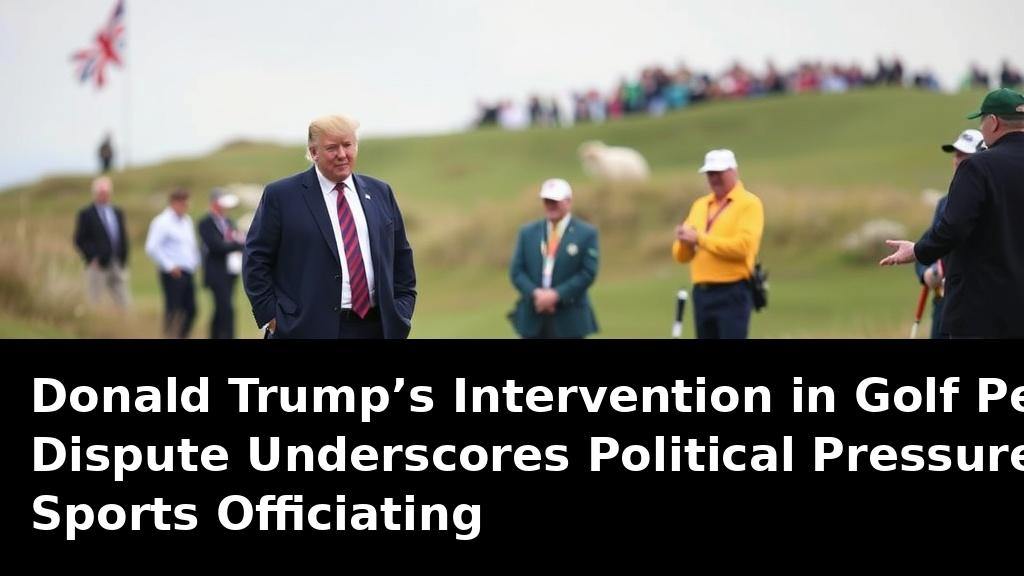
The conclusion of the recent World Cup final prompted many observers to anticipate a temporary respite from American political spectacle in international sport. However, developments at the Open Championship held at Royal Birkdale quickly dispelled that notion. Reports indicate that during a contentious exchange concerning a two-shot penalty imposed on Bryson DeChambeau for improving his backswing area, the golfer allegedly threatened to contact the US president to overturn the decision.
This episode follows an earlier high-profile intervention by the same political figure at the World Cup, where his comments on match proceedings drew widespread attention. In both instances, the involvement of a sitting head of state in on-field or on-course rulings has prompted discussion about the boundaries between political authority and athletic governance.
Modern sports competitions increasingly rely on sophisticated officiating technologies, including video review systems and precise measurement tools, to enhance accuracy and reduce human error. At Royal Birkdale, such systems contributed to the identification of the rule infraction that triggered the penalty. Yet the reported threat to escalate the matter through political channels illustrates a potential vulnerability: external influence may challenge the intended impartiality these technologies are designed to uphold.
The Open Championship, one of golf’s most prestigious major tournaments, operates under strict protocols established by international governing bodies. These protocols emphasize consistency regardless of a competitor’s nationality or prominence. When political figures become entangled in rule enforcement, questions arise regarding the long-term effects on player conduct and the credibility of tournament officials operating under technological scrutiny.
Furthermore, the episode coincides with ongoing debates about the global governance of sport. As events attract larger audiences through digital broadcasting platforms, any perception of politicized decision-making risks eroding public trust in outcomes determined by objective data rather than personal connections.
Analysts note that repeated instances of high-level political commentary on sporting disputes could encourage athletes to seek similar avenues of appeal in future competitions. This pattern may ultimately complicate the adoption of even more advanced officiating tools intended to maintain fairness across borders.